TORSTEN OLAFSSON: The "STANDING WAVES" STORY
The 'shakuhachi' Japanese bamboo flute album "Standing Waves - Zen Shakuhachi Meditations"
was recorded over midnight, from April 4 to 5, 1983, at Sweet Silence Studios on the island of Amager, in Southern Copenhagen, Denmark.
Producer was Finn Olafsson. Sound engineer was Flemming Rasmussen.
This special website section will focus on the story, the background, of the album, retold by Torsten Olafsson, the shakuhachi player himself, in his own words.
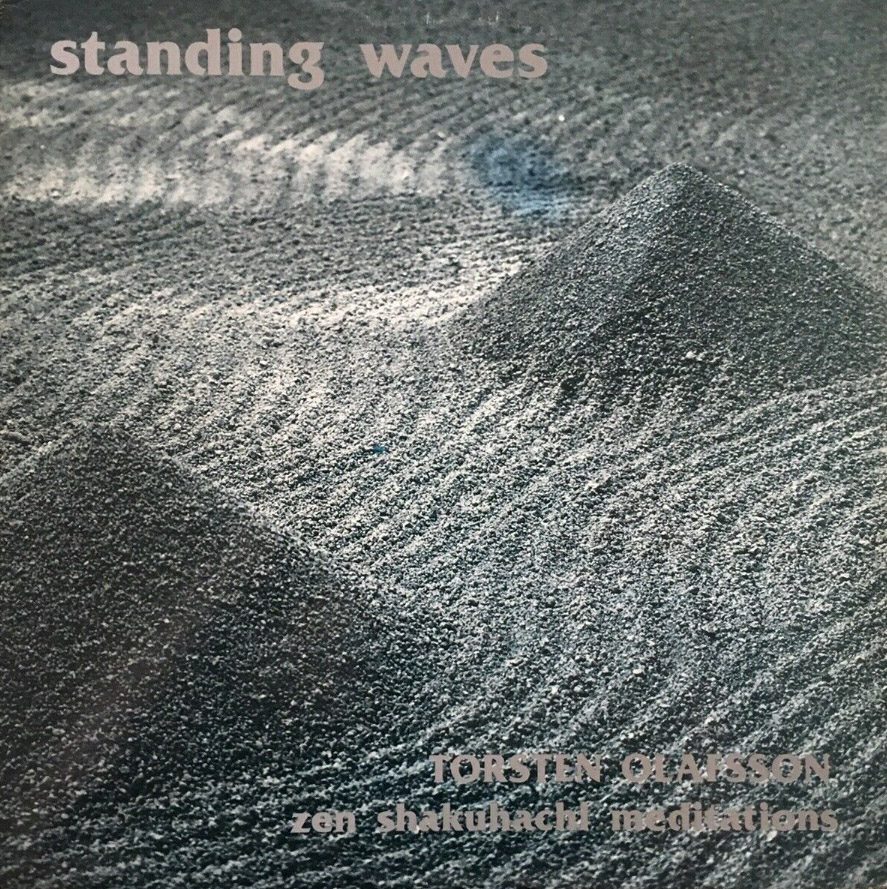
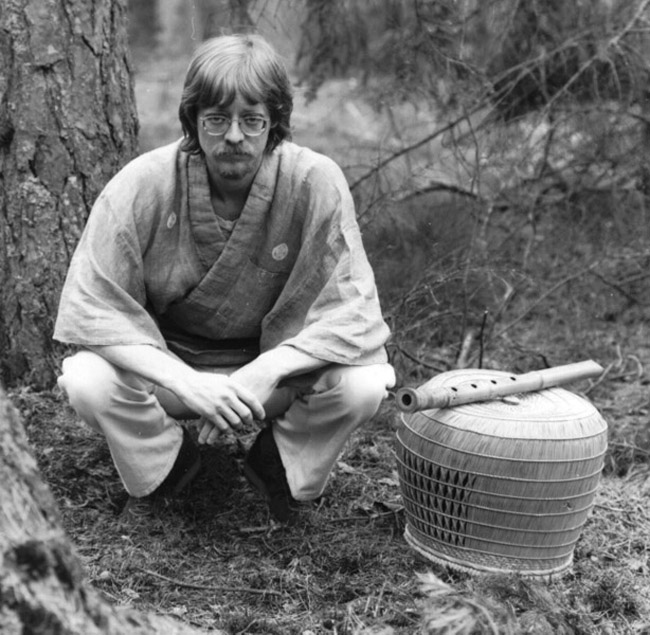
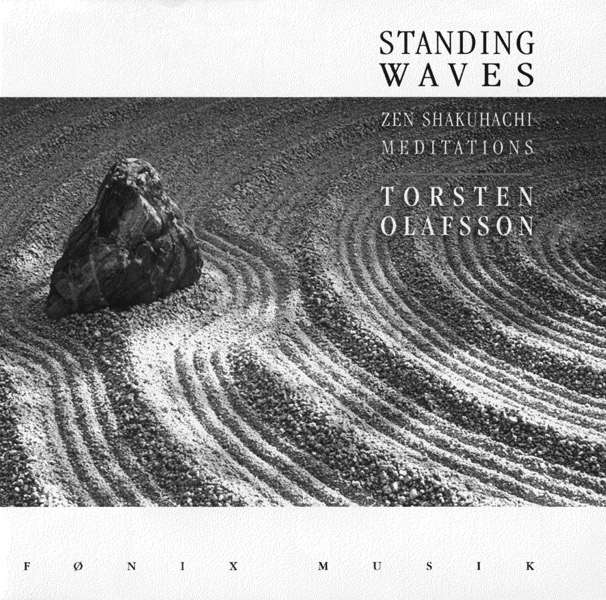
Standing Waves LP 1983 and CD 2001
Left: 'Daisen-in', Kyōto, dry garden photo, 1977, and LP cover design by Torsten Olafsson, 1983. Center photo by Mikkel Scharff, 1983.
Right: CD booklet, 16 pages, designed by Tao Design/Fønix Musik, Denmark, 2001.
In 1984, reacting to the 1983 release of the "Standing Waves" Olafssongs LP/MC 001 album, the then Britsh Shakuhachi Society's Geoff Duckworth commented as follows:
" - - - Listening to the music one is immediately struck by its starkness in terms of tonal variation, decoration, vibrato etc.,
that one hears in the music of players from the Kinko, or Tozan schools.
If you have developed your shakuhachi listening with the music of Yamaguchi, Reibo, Yamamoto, or Yokoyama, for instance,
the music here may be a shock." - - -
" - - - You may, or may not like the music on this record. But I think this would miss the point,
that this record adds to the richness of both one's personal store,
and the whole body of shakuhachi music. - - - "
Link to a scanning of the complete then printed 1984 Geoff Duckworth review, PDF
"Torsten Olafsson is a Danish shakuhachi player. He has produced this record himself.
The record consists of solo shakuhachi music, and all the pieces are from the Meian-ryu honkyoku collection, played according to the Meian way.
Listening to the music one is immediately struck by its starkness in terms of tonal variation, decoration, vibrato etc.,
that one hears in the music of players from the Kinko, or Tozan schools.
If you have developed your shakuhachi listening with the music of Yamaguchi, Reibo, Yamamoto, or Yokoyama, for instance, the music here may be a shock.
The total emphasis is on allowing the passage of music unpatterned from the identity of the player.
The Meian school tradition purports to be the encapsulation of the old Fuke traditions, with its base in the monastic way.
My interpretation of this music is that each piece has an existence accumulated to it through the years of repetitional playing, by men following the same path, and it is only necessary to set ones feet on this path to breathe life into that piece.
At the same time the player is enhanced.
Taking one or two of the pieces, and listening to them being played by other players is in itself most interesting.
As an example, Kyushu Reibo, played by Aoki Reibo. Here, Reibo adheres to the general structure of the piece (as notated in the Meian edition), but introduces variations on some of the phrases.
Also he uses his own style of 'atari' on, for example TSU-RE. TSU is played as a brief, sharp, attach to the RE, which is played with considerable range of dynamics.
Olafsson, in accord with Meian style, plays a longer, relaxed TSU, leading to RE being played unshaded.
The whole range of colour used by Reibo, constrasts with the straightness of tone used by Olafsson.
By comparing these two players, I do not wish to use this comparison as a value judgement of one player being better than another.
Each player expresses the piece in the way he has chosen to approach the shakuhachi, and consequently the direction his own development on the instrument, and the relationship to the music, has taken.
This is, in particular, one of the reasons why I, and, I expect, many others have chosen the shakuhachi as an ideal means of self-expression, simply because it does allow such a range of possibility.
You may, or may not like the music on this record. But I think this would miss the point, that this record adds to the richness of both one's personal store, and the whole body of shakuhachi music.
Geoff Duckworth"
The British Shakuhachi Society, Newsletter, 1984
2001: The Danish Fønix Musik "Standing Waves" CD Version: The CD Booklet
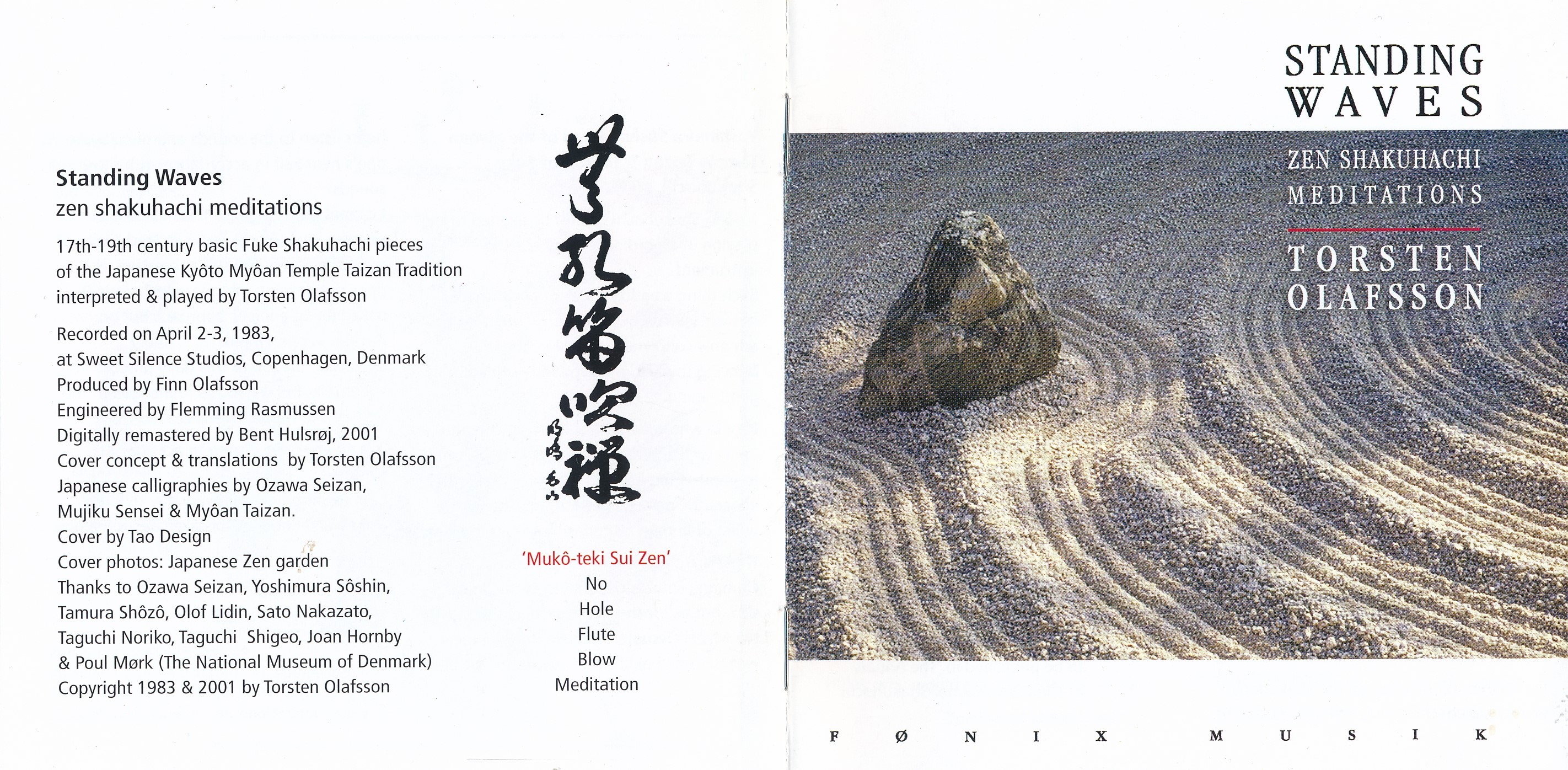
Standing Waves 2001 CD booklet pages 12 & 1
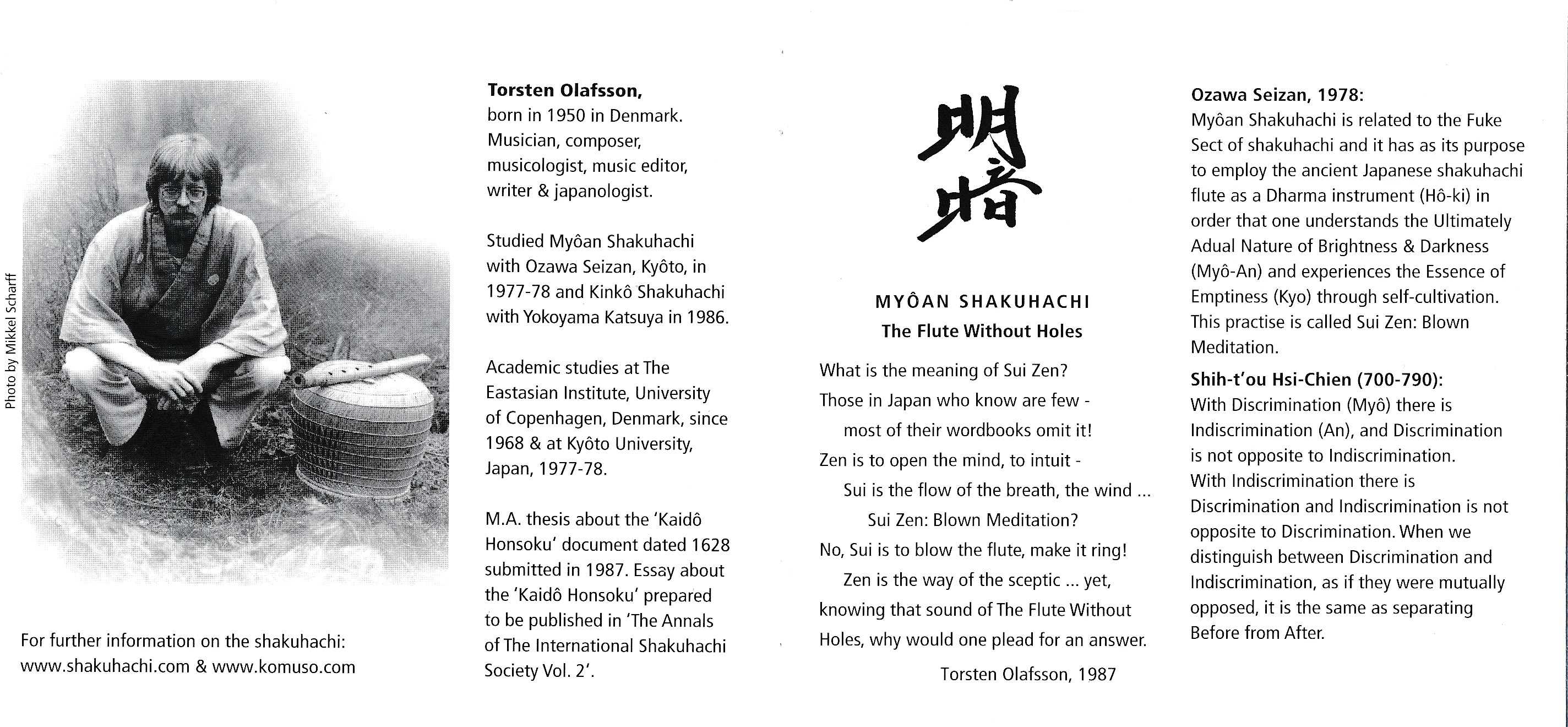
Standing Waves 2001 CD booklet pages 2-3
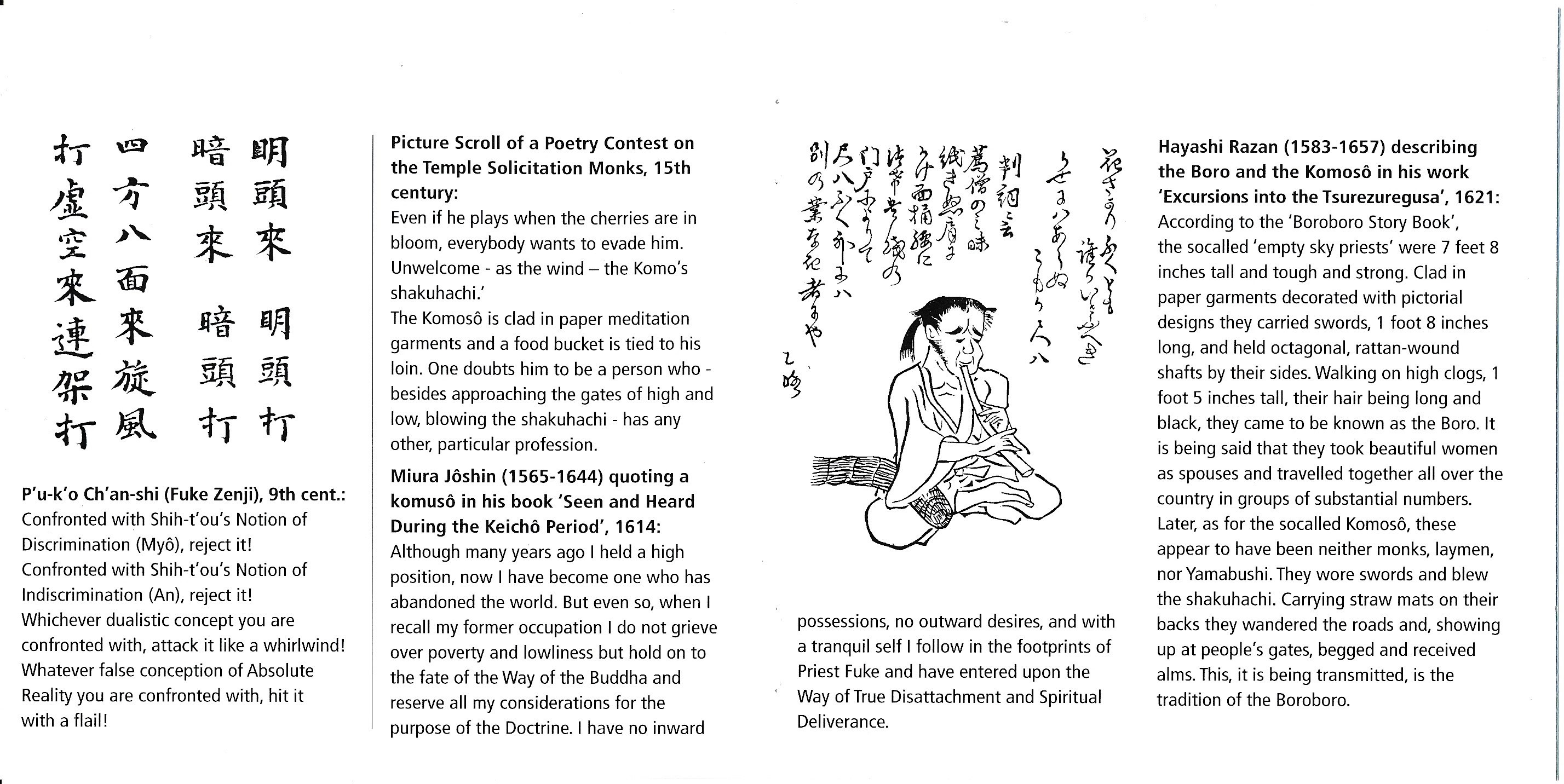
Standing Waves 2001 CD booklet pages 4-5
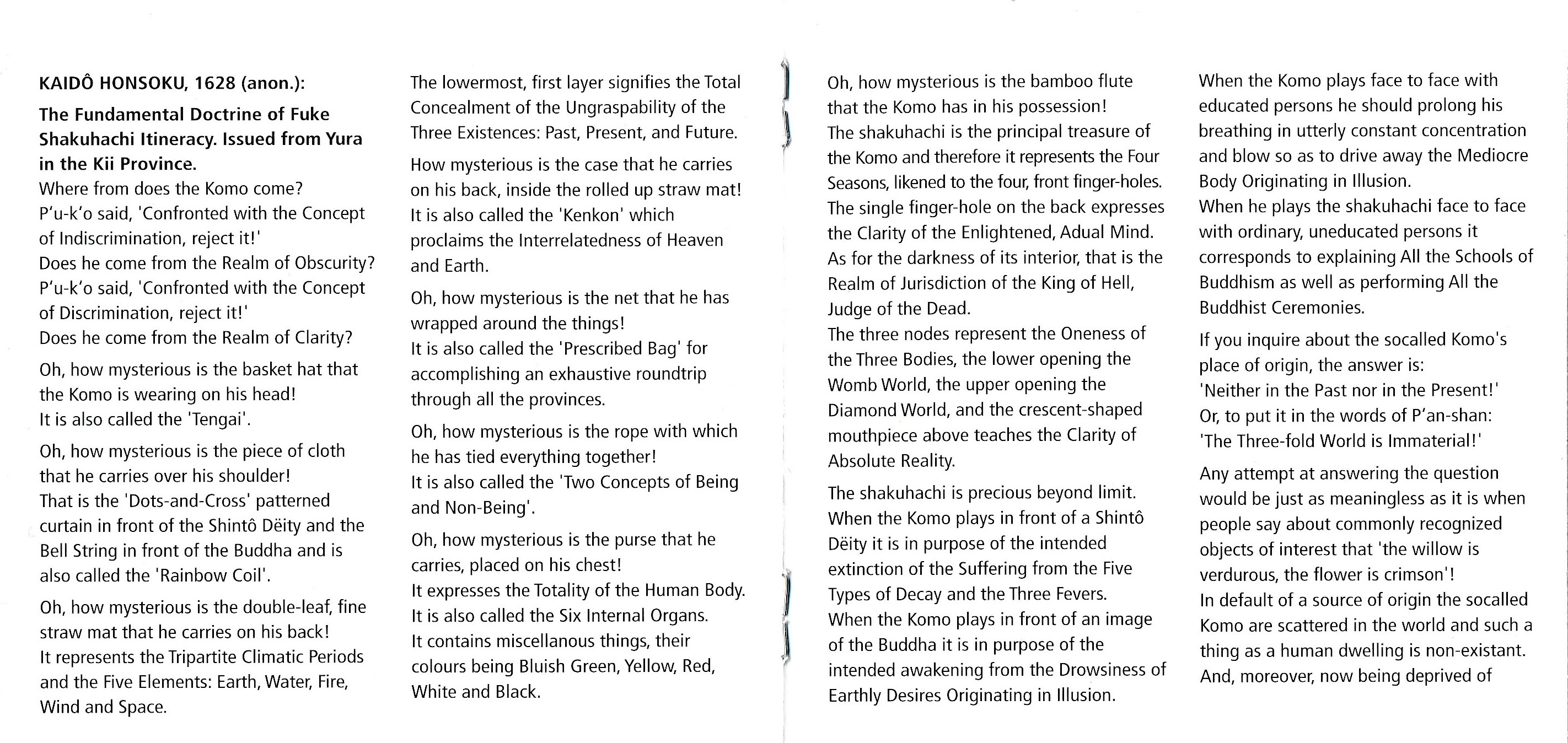
Standing Waves 2001 CD booklet pages 6-7
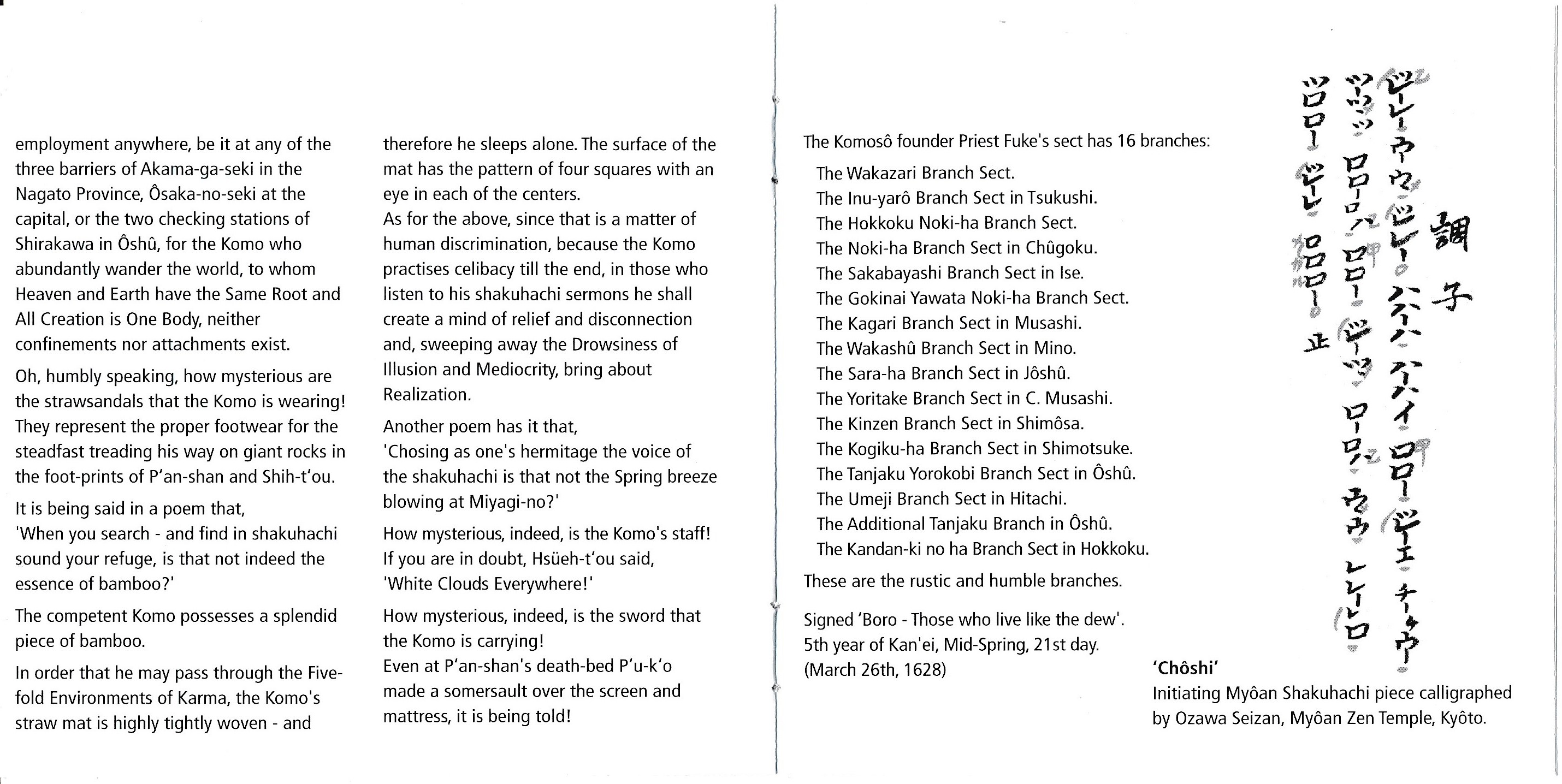
Standing Waves 2001 CD booklet pages 8-9
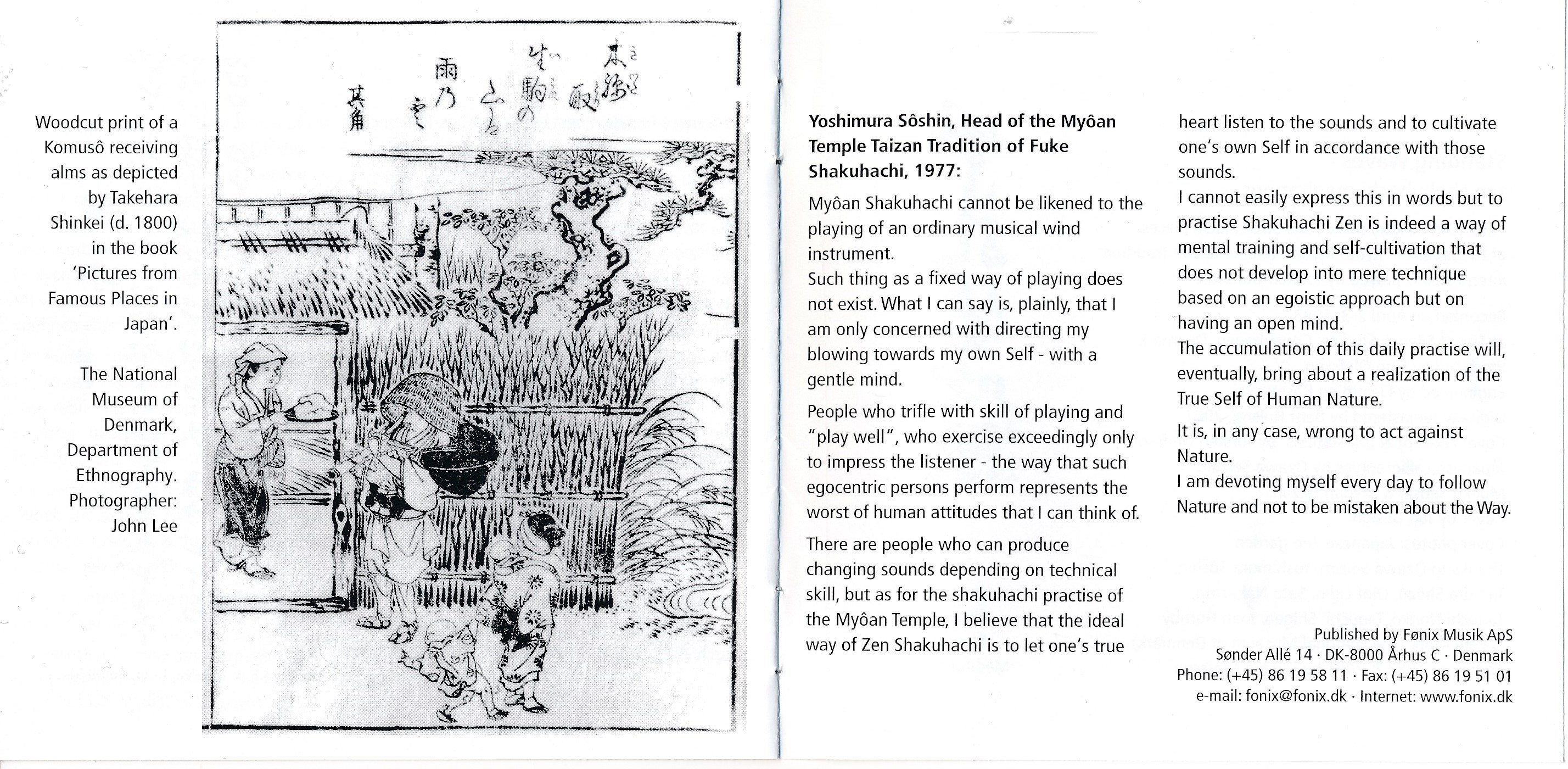
Standing Waves 2001 CD booklet pages 10-11
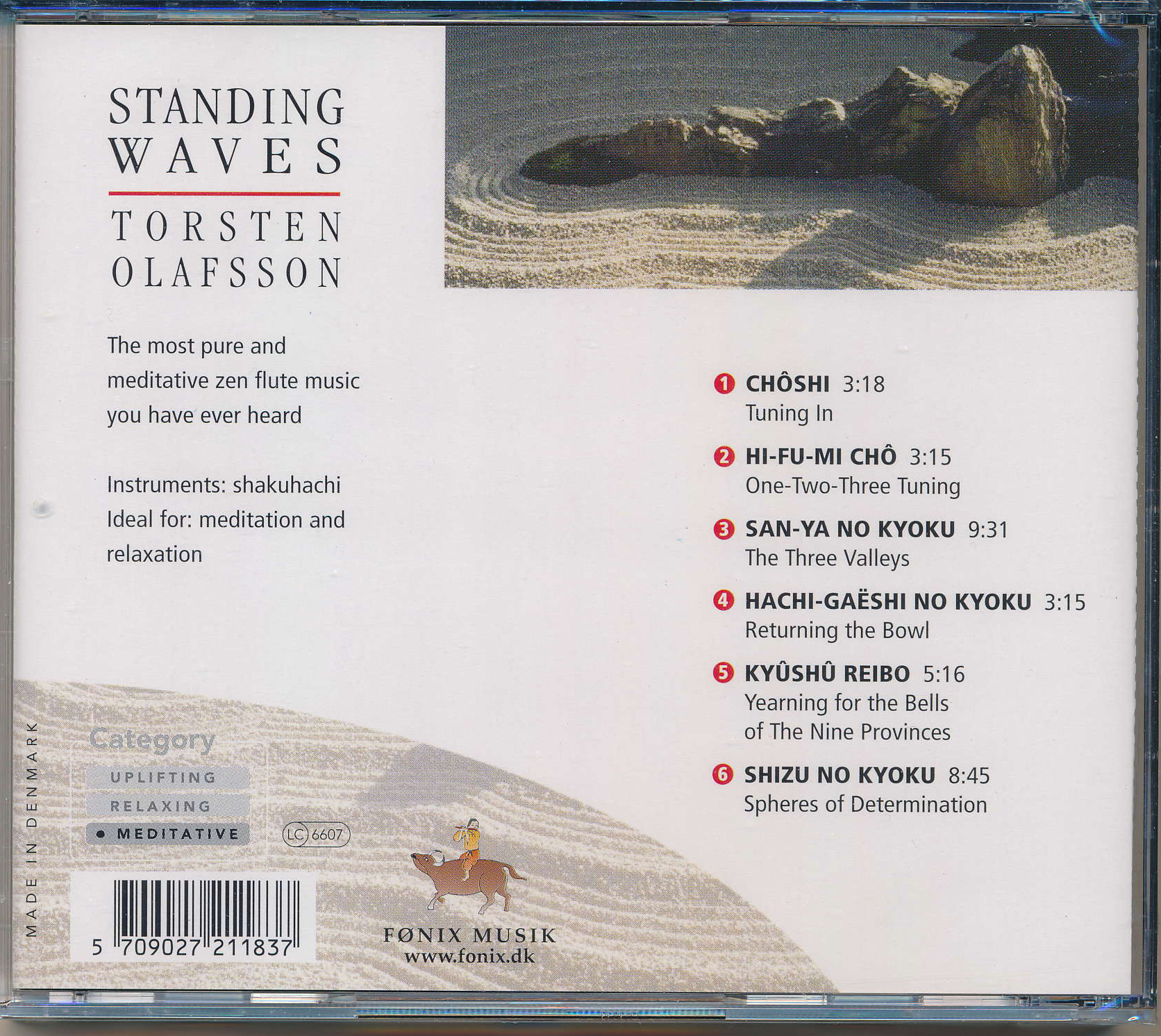
Standing Waves 2001 CD jewel case back